
What to Do If Your Well Water Tests Positive for PFAS: A Hudson Valley Homeowner’s Guide
Home » Pro Tips » Water Treatment » What to Do If Your Well Water Tests Positive for PFAS: A Hudson Valley Homeowner’s Guide
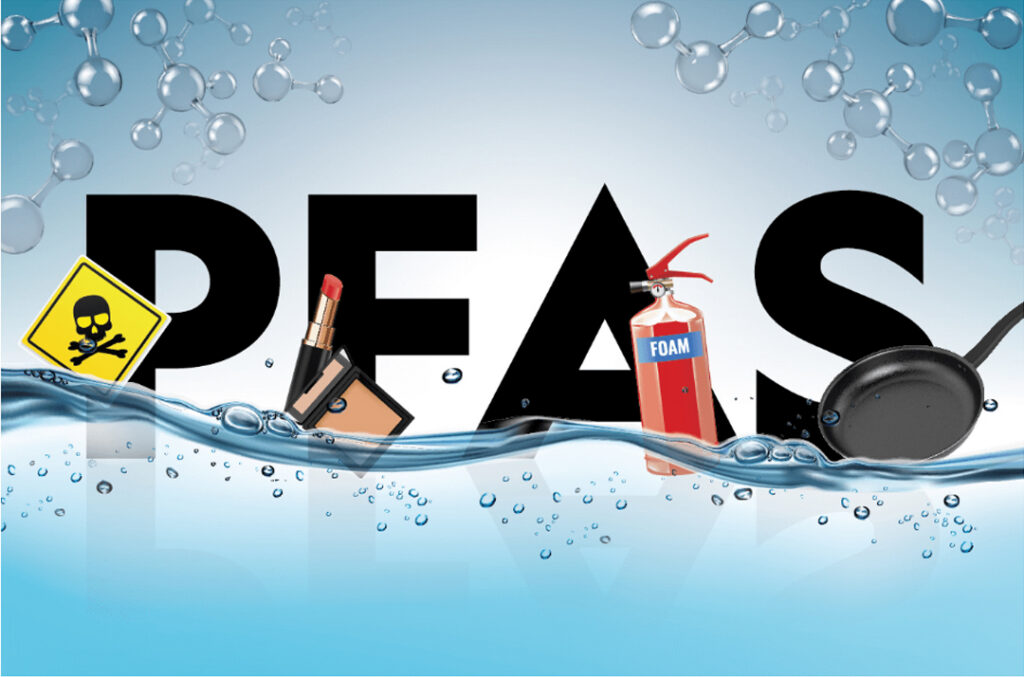
Per- and polyfluoroalkyl substances (PFAS), also known as “forever chemicals,” are common contaminants found in well water. If proper mitigation steps are not taken, long-term exposure to these chemicals can have health implications, such as increased risk of cancer, reproductive issues, and immune system dysfunction.
Because of the risks, understanding how to evaluate and mitigate PFAS in your home or business is critical. This Pro Tip provides an overview of what you should know and steps you should take to ensure clean, healthy water in your home.

UNDERSTANDING THE NUMBERS
The first and most important step is to get your water tested. Unlike other contaminants that may leave signs, such as residue or appliance staining, or strange tastes in the water, PFAS are odorless, tasteless, and invisible. Testing is the only way to determine if they are affecting water quality.
Risk levels can vary by location, with factors such as dense population and high private well concentration increasing the likelihood of contamination. It is important to stay informed about local quality concerns to see if you are at an elevated risk, as well as the standards for well water and public water in your area. In New York State, for example, drinking water standards are 10 nanograms per liter (ng/L) or 10 parts per trillion (ppt).
Another benefit of researching local PFAS risk is because assistance may be available in your location for testing or remediation. Check your state Department of Health website. For NYS residents, go to Health.NY.GOV.
STEPS AND SOLUTIONS
If elevated PFAS levels are detected, don’t panic. We understand that contaminated drinking water may seem scary, but there are plenty of proven solutions that can clean it up and mitigate risks.
A professional home services provider like DS Home Services can help install solutions, such as…
- Granular activated carbon filtration: This system stops contaminants as they enter the home before they get into your plumbing system, protecting both people and plumbing.
- Specialized ion exchange systems: By replacing harmful ions and contaminants with beneficial ones, these systems soften and purify water for residential and commercial applications.
- Reverse osmosis: For more effective purification, reverse osmosis removes up to 99.9% of contaminants and sediments, including particles as small as .001 micron.
Granular activated carbon (GAC) filters and ion exchange systems are commonly installed as whole-home, or point-of-entry, solutions that treat water as it enters from the well into the house. By contrast, reverse osmosis systems are typically installed at specific fixtures, like kitchen sinks, as point-of-use options to further protect drinking and cooking water. In many cases, effective PFAS treatment involves using both approaches together. Ongoing maintenance and periodic water testing are also critical to confirm the system continues working properly and that PFAS concentrations remain under control.
TRUST THE PROFESSIONALS
While there are plenty of projects that industrious homeowners can do themselves, testing their water for contaminants and installing safety solutions should not be one of them.
PFAS management is a precise science, and everything from testing to installation to ongoing monitoring requires an expert hand for accurate, secure water protection. Not all filtration options work in all applications, and finding the right fit requires an intimate knowledge of plumbing, water supply systems, and more. In addition, equipment standards for removing PFAS are often evolving, and older systems may no longer be sufficient to maintain safe drinking water. Water safety systems also require more than just a one-time installation; they need ongoing maintenance, such as filter replacements, and regular testing to ensure everything is operational.
NYS Senate Bill S3207A establishes maximum contaminant levels and a hazard index in drinking water for certain per- and polyfluoroalkyl substances (PFAS) In January of 2025.
Industry standards recommend that homeowners test their water…
- Every year for bacteria and nitrates
- Every 3-5 years for minerals, metals and other contaminants
- Anytime there’s a change in taste, smell, or appearance
- After flooding, plumbing or well work
Even if water looks and feels normal, regular testing is still important to catch any contaminants that don’t leave perceivable traces.
Working with a trusted partner like DS Home Services can help homeowners to sort through all the information to find the best solution. A trusted home services provider can also work with you on ongoing maintenance and testing to help secure a water safety plan for the duration of your time in your home.
Enter your contact information to stay stay informed, with Pro Tips, news and special offers from DS Home Services, and receive $100 off any water treatment or quality system. Want to learn more about PFAS and what to do about them? Read our Free PFAS Well Water Testing in the Hudson Valley: What Homeowners Need to Know and PFAS in Well Water: What Hudson Valley Residents Should Know About “Forever Chemicals” posts, in the Hudson Valley PFAS series.